
Last updated September 10, 2026
Full 25-point door and opener safety check with every visit - springs, cables, rollers, tracks, and your LiftMaster or Chamberlain opener included
You get a price before we start. It does not change when the truck arrives.
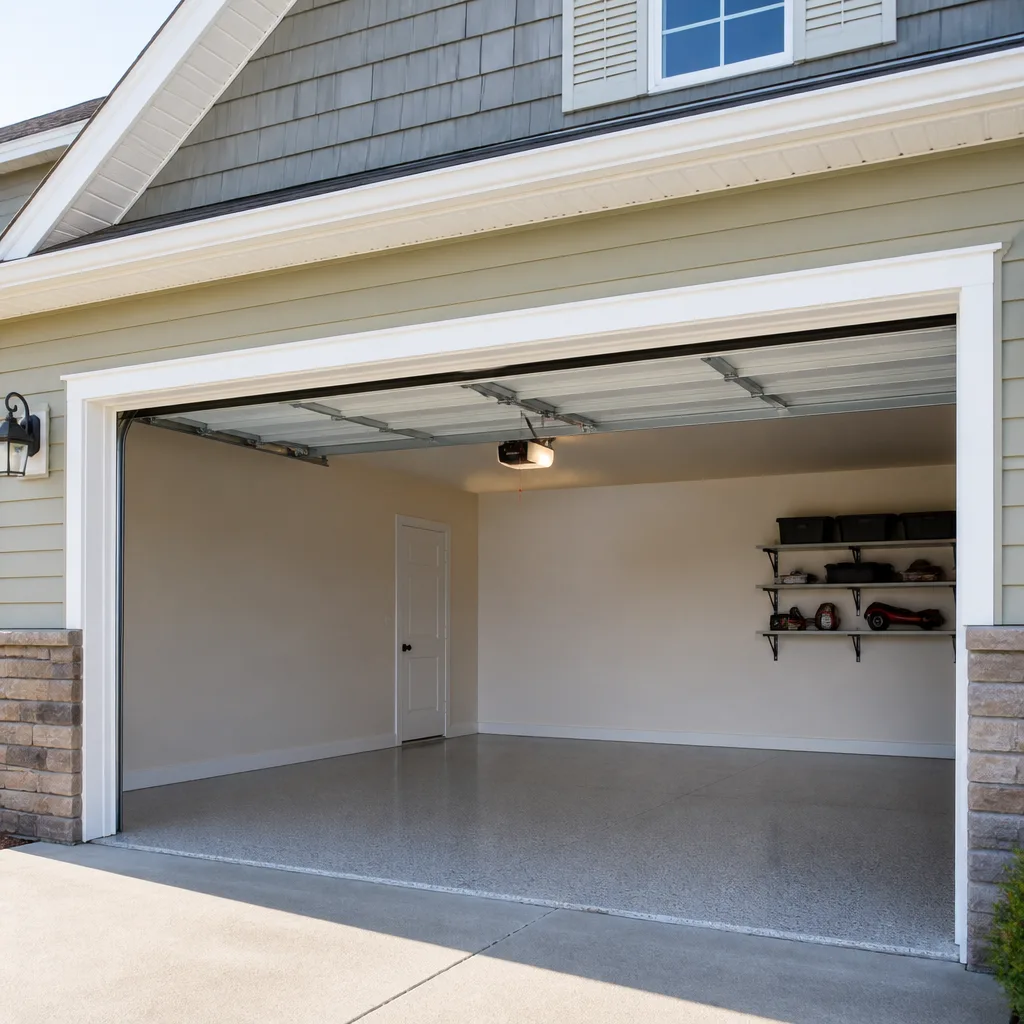
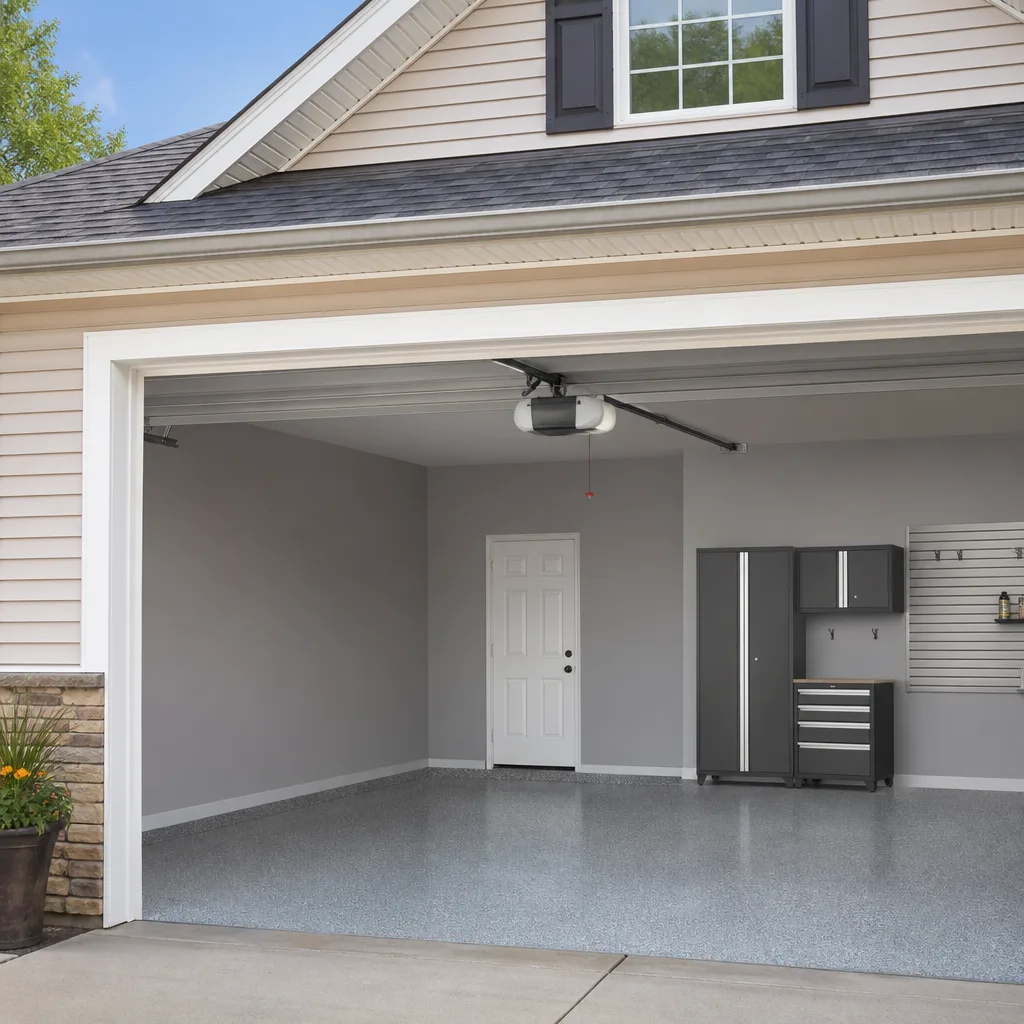
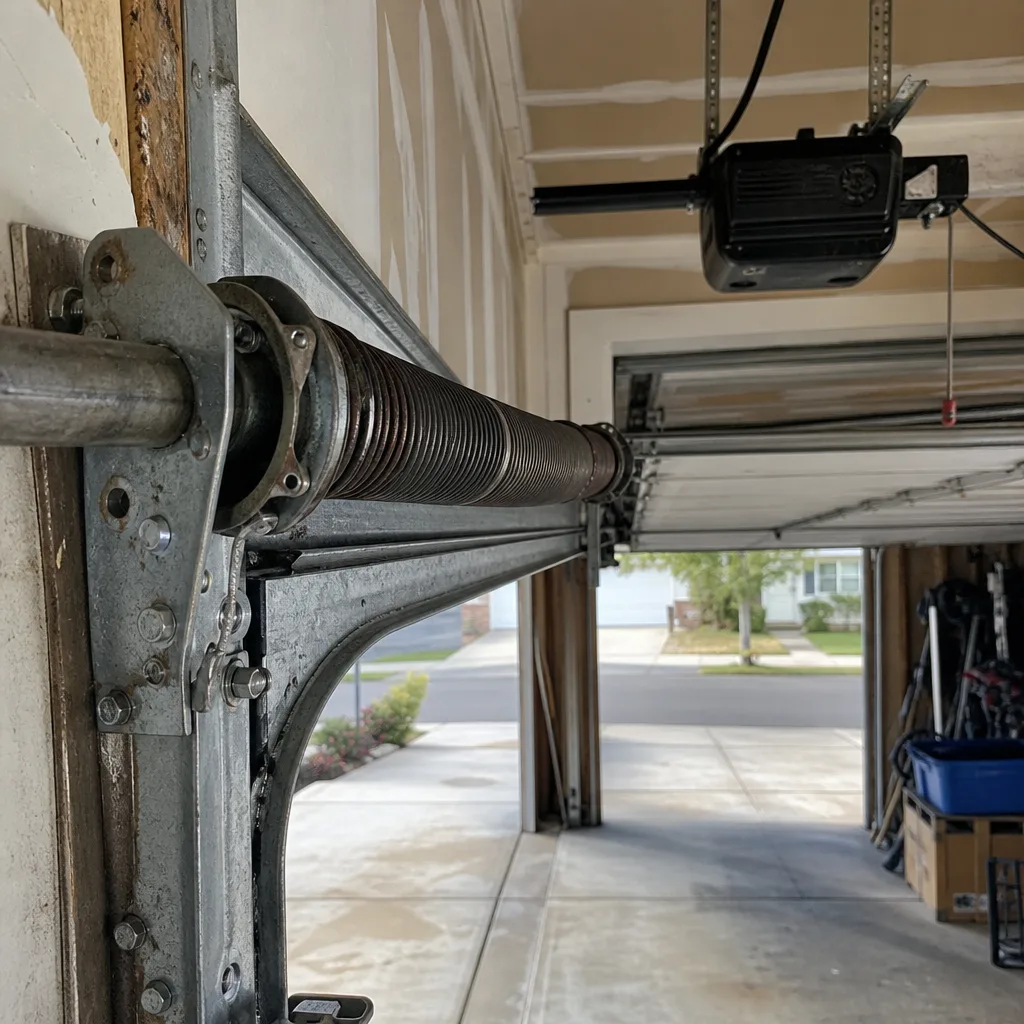 Before
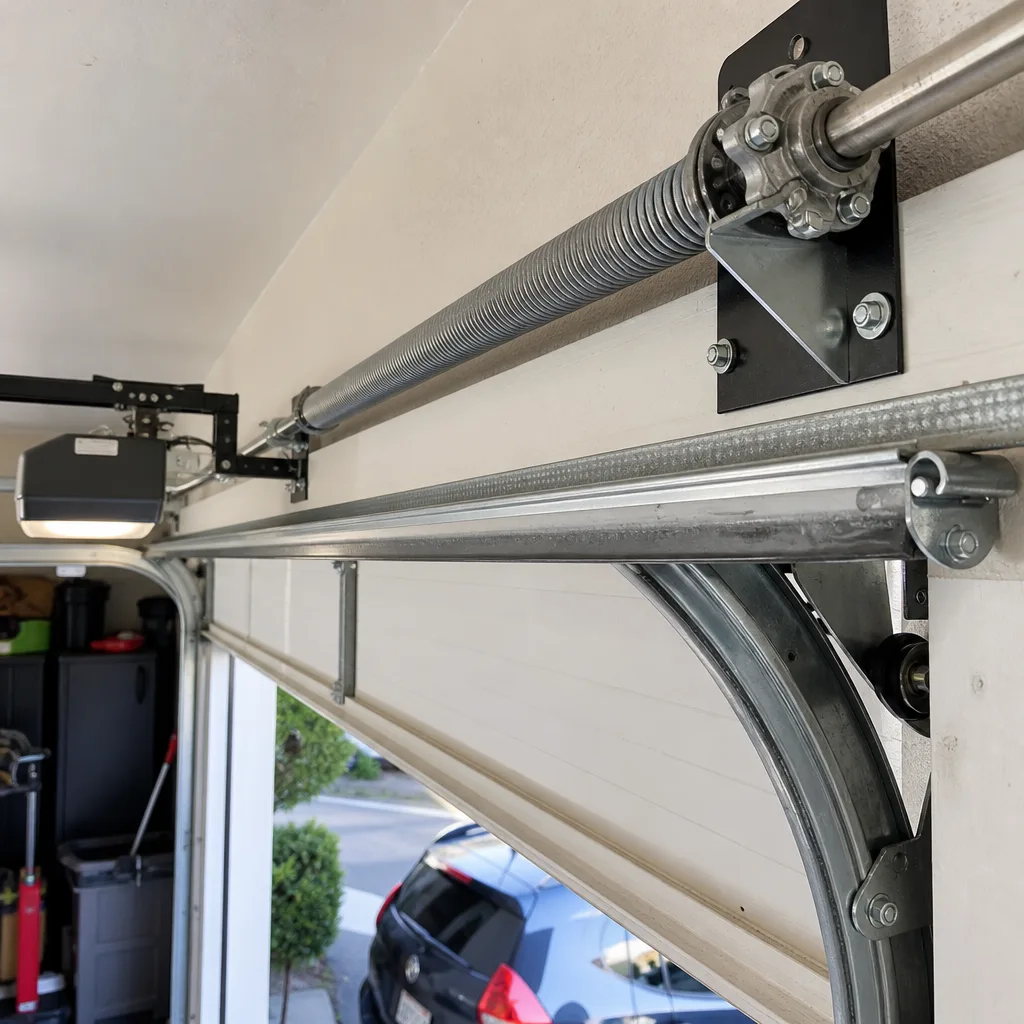 After
After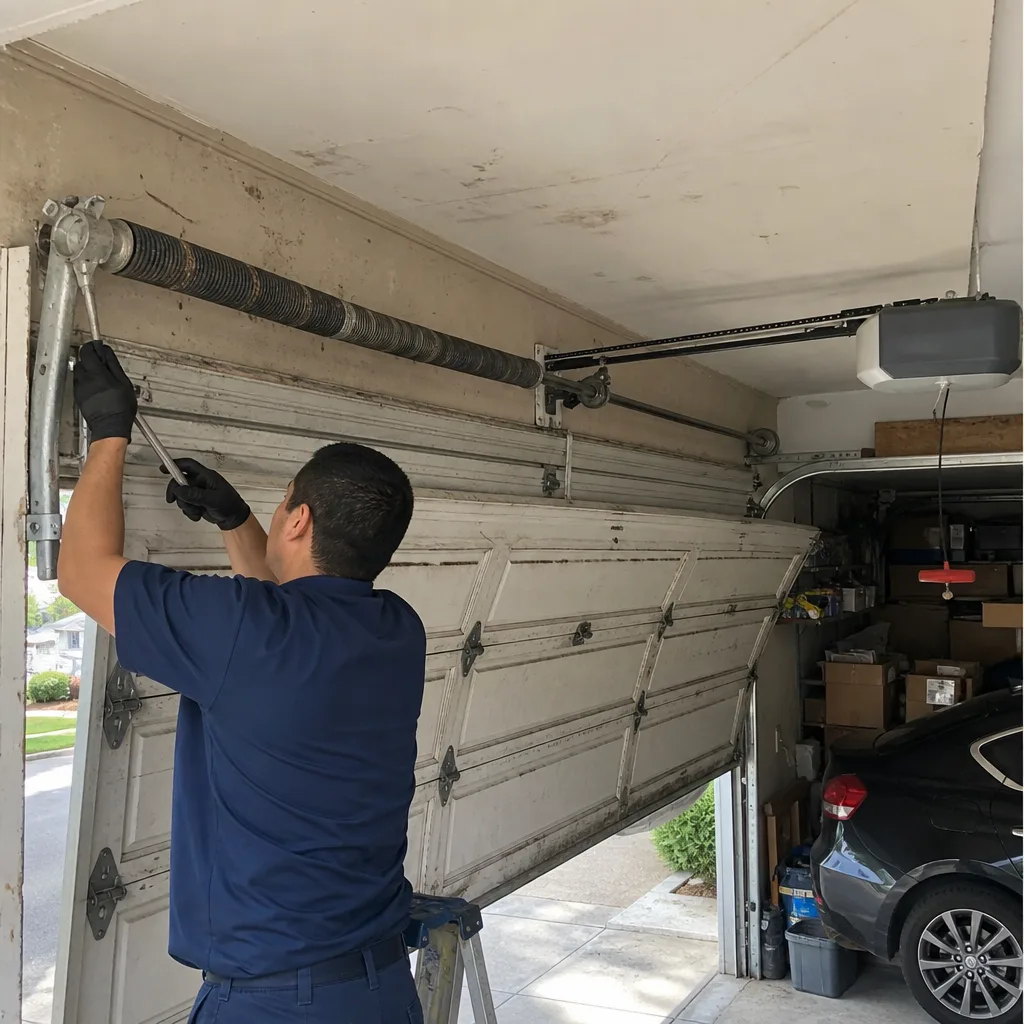 Before
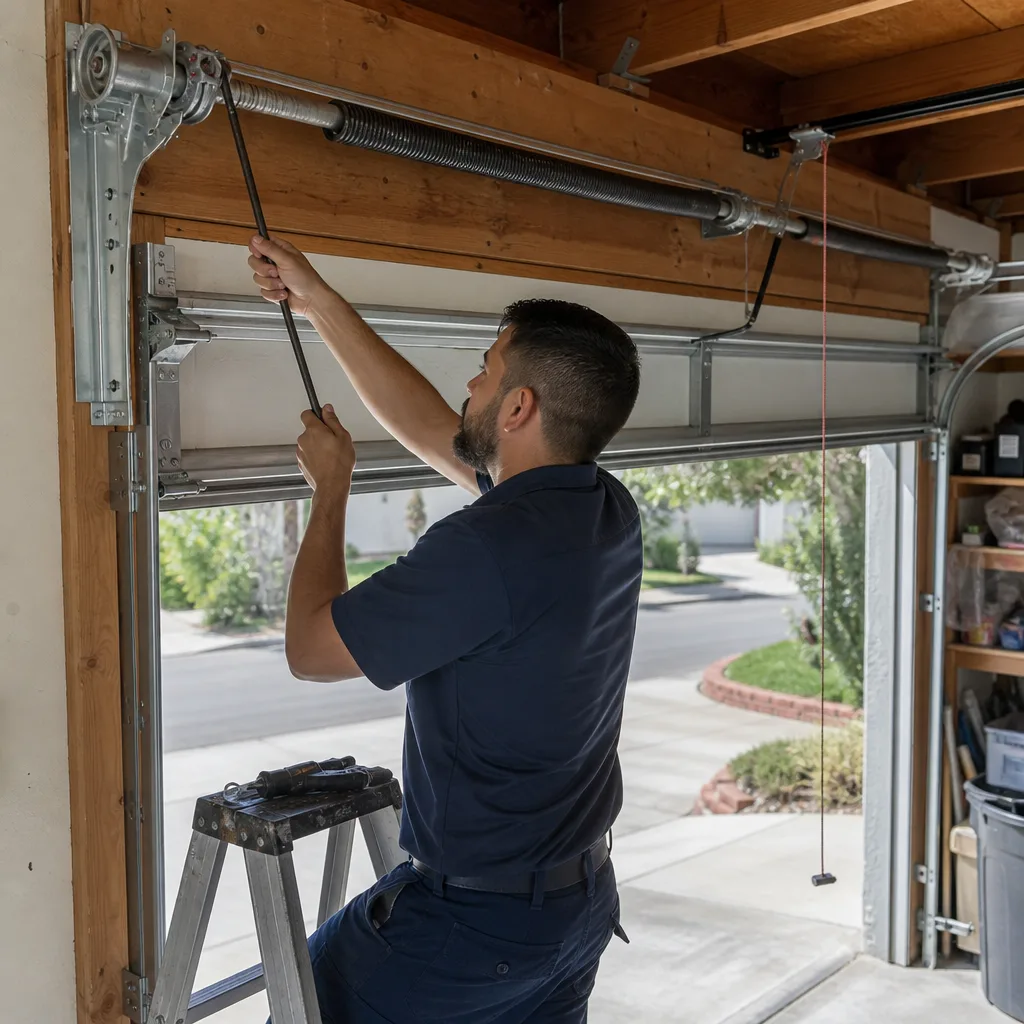 After
After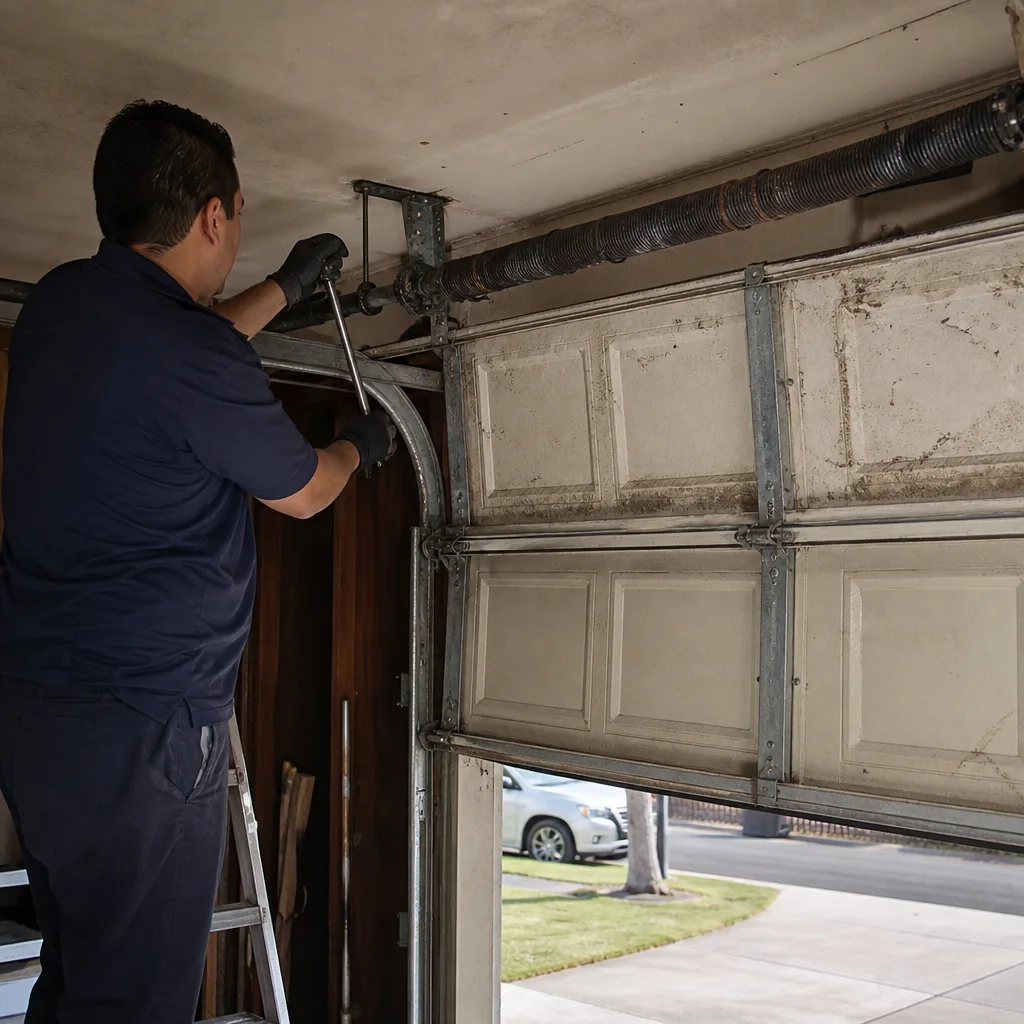 Before
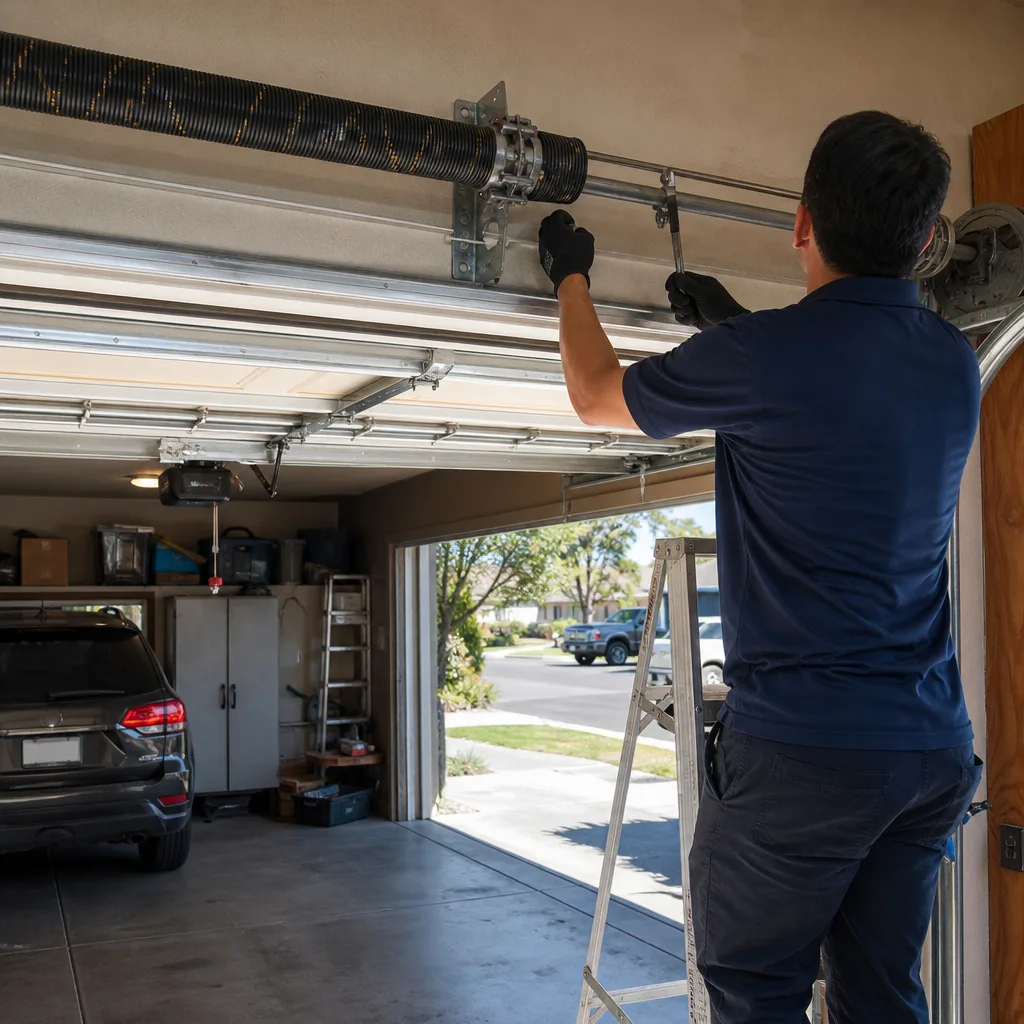 After
AfterGarage Door Warning Signs: A Cypress Homeowner’s Reference Guide
A grinding noise and a scraping noise from a garage door are not the same problem. One is almost always a lubrication issue you can address this weekend. The other can mean a broken roller about to derail the door - and derailed doors don’t announce themselves before they come down. In Cypress, where marine air from the coast accelerates rust on torsion hardware and summer UV degrades cable sheathing faster than inland markets, the same symptom can mean different things at different ages. This guide - along with our Complete Guide to Garage Door in Cypress - maps each warning sign to its mechanical cause, assigns a plain urgency tier, and tells you what is safe to do yourself and what requires a trained technician with the right parts on the truck.
Quick Answer
The most critical garage door warning signs for Cypress homeowners are: uneven door height when closed (indicates spring imbalance - call within 48 hours), loud popping or snapping sounds (potential broken spring - stop using the door immediately), and visible gaps in extension springs or frayed cables (stop use, call same day). Most other symptoms - grinding, slow operation, remote inconsistency - allow a few days to a week for scheduled service. The one sign most homeowners ignore, uneven closing height, is also the clearest early predictor of catastrophic spring failure - something we cover step-by-step in our guide on How to Hire a Garage Door Contractor in Cypress.
Table of Contents
- What Different Sounds Mean: A Symptom-to-Cause Map
- Visual Warning Signs Specific to Cypress’s Climate
- Movement and Balance Problems: The Three-Tier Urgency System
- The Most Ignored Warning Sign - And Why It Matters Most
- Opener and Control Issues That Predict Bigger Problems
- What You Can Safely Check Yourself - And What You Shouldn’t
- Common Mistakes to Avoid
- When to Call a Professional
- Frequently Asked Questions
What Different Sounds Mean: A Symptom-to-Cause Map
Homeowners in Cypress often describe a problem as “noisy” without distinguishing what kind of noise. That distinction matters. The sound a garage door makes is the closest thing it has to a diagnostic code. Here is what we have learned from 42 years of listening to doors in Orange County.
Grinding: The Low-Rumble Warning
A steady, low grinding during opening or closing usually traces to metal-on-metal contact where lubrication has dried out. In Cypress, the combination of coastal humidity and seasonal temperature swings causes lithium-based greases to separate faster than they do in drier inland climates like Yorba Linda or Anaheim Hills. The grinding typically comes from:
- Hinges binding against the roller stem as the door flexes through the curved track section
- The trolley rolling dry across the opener rail
- Worn bearings in the idler pulley on an extension-spring system
Urgency tier: Monitor and maintain. This is a maintenance issue, not a safety issue. A can of white lithium grease and 20 minutes on a Saturday morning will usually resolve it. If grinding persists after lubrication, the hinge or roller itself may be worn and need replacement.
Scraping or Screeching: The Roller Alert
A sharp, metallic scrape or intermittent screech is different. This typically means a roller has flat-spotted, cracked, or come out of its track. Steel rollers without ball bearings will grind flat over time. Nylon rollers can crack from UV exposure, which is more aggressive in Cypress than many homeowners realize - south-facing doors absorb significant reflected radiation from driveways and stucco walls.
The danger is derailment. A door with a failed roller can jump its track, and a 200-pound steel door off its track has no predictable path. We have responded to emergency calls in the Cypress College area and along Katella Avenue where a derailed door blocked a car inside the garage or, worse, came down on the vehicle’s roof.
Urgency tier: Service within a week, sooner if the scrape is loud or the door shudders.
Popping, Snapping, or Gunshot Sounds: The Spring Failure
A single loud pop, often described as sounding like a gunshot or firecracker, is almost always a torsion spring breaking. The sound is the release of hundreds of pounds of stored torque. After the pop, the door will feel much heavier, may open only a few inches, or may slam shut if it was in motion.
Urgency tier: Stop using the door now. A garage door with a broken spring is dangerous to operate manually and can damage the opener if you try to use the motor. The opener is not designed to lift the full weight of the door. In our experience serving Cypress, we have replaced openers that failed because the homeowner kept pressing the button after a spring broke, burning out the drive gear.
Rattling or Vibrating: The Hardware Loosening
A rhythmic rattle that synchronizes with door movement usually means fasteners are backing out. The constant vibration of daily operation works bolts and screws loose over years. In Cypress’s older neighborhoods - the original tract homes near Cypress Park and along Lincoln Avenue - we see this frequently on doors installed in the 1980s and 1990s with original hardware. The nuts on roller brackets, track hangers, and opener mounting angles all loosen gradually.
Urgency tier: Service within a week. Loose hardware can progress to component failure or track misalignment. A quick torque-check during a professional tune-up in Cypress catches this before it becomes expensive.
Visual Warning Signs Specific to Cypress’s Climate
Cypress sits seven miles from the Pacific, close enough for marine air to deposit salt moisture overnight, especially during May and June when the marine layer pushes inland past the 405. That climate creates visual warning signs you will not see in identical doors twenty miles east - read more in our Seasonal Garage Door Care for Cypress guide.
Rust Patterns on Torsion Bars
Torsion springs are mounted on a steel shaft above the door. In Cypress, we regularly see two distinct rust patterns that tell different stories:
- Uniform surface rust across the bar: Cosmetic. The galvanizing has worn thin from age. Not immediately dangerous, but the bar should be inspected for pitting during the next service.
- Concentrated rust at the spring cones and set screws: Active corrosion where dissimilar metals meet. This weakens the set screw’s grip and can allow the spring to slip or unwind unexpectedly. We have replaced torsion bars in the Trident Estates area where set screws had rust-welded themselves in place, making safe spring replacement impossible without changing the bar.
UV-Related Cable Fraying
Lift cables on extension-spring systems run vertically along the door sides, fully exposed to sun. In Cypress, south and west exposures cause the cable’s outer fibers to fuzz and fray years before the inner steel strands weaken. The warning sign is a brushy, almost velcro-like texture on the cable surface. By contrast, mechanical fraying from a misaligned pulley or sharp edge creates clean, bright steel filaments at a specific point.
UV fuzzing is a monitor and maintain signal. Mechanical fraying at a point is service within a week - the cable is being cut by something and will fail.
Panel Delamination in Marine Air
Steel-back insulated doors with vinyl or composite facing can delaminate when moisture penetrates seams. In Cypress, we see this on doors within two blocks of major streets - Katella, Ball, Lincoln - where morning marine fog lingers longest. The warning sign is a bubble or soft spot in the panel facing, usually starting at the bottom edge where splash-back from driveway washing accelerates moisture intrusion. Once delamination starts, the panel’s structural integrity degrades. A replacement door in Cypress with full steel or aluminum construction avoids the problem entirely.
Track Corrosion at the Bottom
Horizontal track sections near the floor corrode faster in Cypress than in drier areas because concrete slabs wick ground moisture, and the lowest track inches sit in the most humid air layer. The warning sign is orange staining or flaking at the track’s bottom curve, where the door transitions from vertical to horizontal. Advanced corrosion here creates rough surfaces that accelerate roller wear and can cause binding.
Movement and Balance Problems: The Three-Tier Urgency System
We use three tiers with every homeowner who calls. They are not arbitrary. They reflect what we have seen fail, and when, across four decades of service calls.
Tier 1: Stop Using the Door Now
These conditions present immediate risk of property damage or injury.
- Broken spring: Door will not stay open, may slam shut, opener strain is severe.
- Frayed or separated lift cable: Door can drop unevenly, twist in tracks, or fall.
- Door off track: No predictable behavior; do not attempt to force it.
- Visible gap in extension spring: The spring is broken; the safety cable may be the only thing holding it.
- Door reverses immediately after touching floor: Safety sensor misalignment can allow unexpected reversal, but if accompanied by loud noises or visible component damage, stop use.
In any Tier 1 situation, disengage the opener if you can do so safely (pull the red emergency release cord when the door is closed), and do not operate the door manually if it feels heavy or hangs unevenly. Call for same-day service.
Tier 2: Service Within a Week
These conditions will worsen and may become Tier 1, but the door is operable with caution.
- Grinding or scraping that persists after lubrication
- Slow or labored opener movement without broken spring symptoms
- Remote or wall button requiring multiple presses
- Loose hardware visible during visual inspection
- Weather stripping torn or missing, allowing pest or water intrusion
Operate the door manually once to check balance (see the safe-check section below), then use the opener minimally until service.
Tier 3: Monitor and Maintain
These conditions indicate normal wear or minor issues that should be addressed at the next scheduled maintenance.
- Cosmetic rust on non-structural hardware
- Minor squeak that resolves with lubrication
- Weather stripping compression set (flattened but intact)
- Remote range slightly reduced (often battery-related)
The Most Ignored Warning Sign - And Why It Matters Most
The warning sign Cypress homeowners most frequently ignore is also the most diagnostically valuable: uneven door height when fully closed.
Stand in your driveway and look at the bottom of your closed door. It should sit level with the concrete, with equal gap (or equal contact) across the full width. If one corner sits a half-inch higher than the other, or if the center bows slightly up or down, you are looking at spring imbalance.
Here is why this matters more than noise, more than speed, more than remote glitches. A torsion spring system uses one or two springs to counterbalance the door’s weight. When springs are properly matched, the door hangs level and moves with neutral effort. When one spring has weakened - lost torque through metal fatigue, or been improperly adjusted - the door torques slightly as it closes. The stronger spring pulls its side down harder.
This uneven loading does three things progressively:
- It overloads the remaining good spring. A job meant for two springs now falls mostly to one. The good spring fatigues faster.
- It twists the door panel structure. Steel doors flex; wooden doors crack. Either way, the geometry that keeps rollers in track degrades.
- It strains the opener. The motor must pull unevenly, wearing drive gears and sprockets prematurely.
We have replaced perfectly good openers in Cypress - LiftMaster and Chamberlain units with years of service life remaining - because spring imbalance destroyed the drive mechanism. The homeowner thought the opener had failed. The real failure was the spring, two years earlier, signaled by that slight tilt at the bottom of the closed door.
Urgency tier: Service within a week, sooner if the gap exceeds one inch or is worsening. Spring adjustment or replacement is not a DIY project. The torque stored in a wound torsion spring can cause serious injury or death if released improperly. Our technicians carry spring winding bars and calibrated torque equipment on every truck, and most spring jobs in Cypress are completed in a single visit with the door operational before we leave.
Opener and Control Issues That Predict Bigger Problems
Opener symptoms are often misdiagnosed by homeowners as electrical or remote problems when they are actually mechanical. Here is the distinction we make on every service call.
Remote Works Intermittently or Only at Close Range
Before assuming the remote or opener logic board has failed, check the LED indicator on the wall button. If the learn indicator flashes when you press the remote, the signal is being received. The issue may be:
- Interference from LED light bulbs installed in the opener housing or garage fixtures. Cheap LED bulbs emit RF noise in the 315-390 MHz range used by most modern openers. We see this frequently in Cypress homes where homeowners have upgraded to energy-efficient lighting. Swap the bulb for a name-brand LED rated “garage door opener compatible.”
- Weak or failing logic board capacitors, especially on Genie and older Chamberlain units from the early 2010s. The board receives the signal but cannot process it consistently.
If the remote fails only in hot weather, the issue is often thermal expansion in the logic board or remote battery contacts. This is monitor and maintain unless it progresses to total failure.
Opener Runs But Door Does Not Move
The motor hums or the chain/belt moves, but the door stays put. This is almost always a disconnected or broken trolley, or a stripped gear in the opener. The critical distinction: if the opener runs for a few seconds then stops, the door is likely mechanically bound. If it runs continuously without door movement, the drive train has failed.
Either way, stop using the opener until inspected. Running a disconnected opener burns the motor. We carry replacement gears, trolley assemblies, and complete opener units for Cypress homes on our trucks, including current LiftMaster and Chamberlain models with battery backup and myQ connectivity.
Door Reverses Before Hitting the Floor
Modern openers have force-limiting circuits that reverse the door if resistance exceeds a calibrated threshold. If your door reverses two feet from the floor, the cause is usually:
- Track misalignment or roller binding at the horizontal curve - mechanical resistance the opener interprets as obstruction
- Weakened springs causing the opener to bear more weight than calibrated for, triggering force limits
- Incorrect travel limit settings after a power outage or manual operation
Do not simply increase the force setting. That overrides a safety feature. Identify and fix the underlying cause. In Cypress’s older homes with original track installations, we often find that settling foundations have shifted the track mounting points, creating binding that no force adjustment can compensate for.
What You Can Safely Check Yourself - And What You Shouldn’t
There is a clear line between homeowner maintenance and professional service. We want you to know where it is.
Safe to Do Yourself
- Visual inspection: Look at springs, cables, rollers, and track with the door closed. Use a flashlight. Note rust, fraying, gaps, or loose hardware. Do not touch - just observe.
- Balance test: Close the door, disengage the opener (red cord, door down), and lift manually to waist height. A properly balanced door stays there. If it rises or falls, the springs need adjustment.
- Reversal test: With the opener engaged, place a 2×4 flat on the floor where the door contacts it. The door should reverse on contact. If it does not, the force setting or safety sensors need professional attention.
- Lubrication: Apply white lithium grease to hinges, roller stems (not the wheels themselves if nylon), and the opener rail. Wipe excess. Do not lubricate the track - it attracts grit.
- Sensor alignment: Check that both safety sensors show steady LEDs (usually green). If one is off or blinking, clean the lens and verify nothing blocks the beam. If alignment is visibly off, adjust carefully by hand.
Never Do Yourself
- Never adjust or replace torsion springs. The winding bars must be inserted properly, and torque released in controlled increments. Improper technique causes severe injury. We have seen homeowners in Cypress and surrounding cities taken to emergency rooms after spring accidents.
- Never disconnect a lift cable with the door open. The door’s weight is fully on the cables when open. A released cable allows sudden, uncontrolled descent.
- Never attempt to force a derailed door back into track. The geometry is precise. Forcing it bends track, damages rollers, and risks the door falling.
- Never remove the bottom roller bracket. This bracket is under the highest spring tension and is the most dangerous point on the door.
If you are uncertain whether a check is safe, it isn’t. Call us. We answer live, 24/7, including holidays, and we carry the parts to fix most problems in one visit.
Common Mistakes to Avoid
- Ignoring the first sign because the door still works. In Cypress’s climate, a small rust spot on a torsion bar becomes a seized set screw in six months of marine air exposure. Early intervention costs less.
- Using WD-40 on garage door components. WD-40 is a solvent and light penetrant, not a lubricant. It displaces the grease that should be there and attracts dust. Use white lithium grease or a product specifically formulated for garage doors.
- Replacing the opener when the springs are the real problem. We see this mistake most often with Genie and Craftsman openers in the original Cypress tract homes. The opener labors because springs have weakened. A new opener on weak springs fails the same way.
- Assuming all grinding sounds are equal. A weekend of lubrication fixes one. The other needs a roller replaced before it derails. Listen for location, rhythm, and whether it changes with temperature.
- DIY spring replacement after watching online videos. The videos rarely show the full torque release or what happens when a winding bar slips. Our technicians train for months under experienced journeymen before handling spring work solo.
- Neglecting seasonal maintenance in fall. Cypress’s mild winters mean homeowners forget that temperature drops affect spring torque and lubricant viscosity. A November tune-up prevents January emergencies.
- Choosing the lowest bid without verifying what’s included. A cheap spring job using incorrect wire size or insufficient cycles will fail early. We quote the flat price upfront, specify the spring cycle rating, and put our 90-Day Done Right Promise in writing.
When to Call a Professional
Call a professional when any Tier 1 condition appears, when a Tier 2 condition persists or worsens, or when you are uncertain which tier applies. In our experience serving Cypress since 1984, the calls we receive at 10 PM on a Saturday are almost always from homeowners who noticed a warning sign on Tuesday and hoped it would improve.
Specific scenarios that warrant immediate professional attention: a broken spring or cable, a door off its tracks, an opener that runs without moving the door, or any door that feels heavy, hangs unevenly, or reverses unexpectedly. These are not maintenance items. They are safety issues.
Mainspring Garage Door Co. offers free estimates in Cypress. Our phones are answered by a live person 24 hours a day - no voicemail, no phone tree, no after-hours answering service. Most repairs are completed in a single visit because our trucks carry springs, cables, rollers, and openers from major brands including Chamberlain, Genie, Clopay, and Amarr. The price is stated before any work begins, and every job is backed by our 90-Day Done Right Promise in writing. Call (626) 593-8187 to schedule or request same-day emergency service.
Frequently Asked Questions
Garage door spring repair in Cypress typically ranges from $180 to $340 for a standard torsion spring replacement, depending on door size, spring cycle rating, and whether one or both springs need replacement. We state the flat price before any work begins, and our trucks carry the correct springs for most residential doors so the job is finished in one visit. Call (626) 593-8187 for an exact quote - estimates are free.
A noisy garage door can be dangerous if the noise indicates a broken roller, frayed cable, or spring imbalance. Grinding from dry hinges is merely annoying and easily fixed. Scraping or popping sounds signal mechanical failure that can lead to derailment or sudden door drop. The key is matching the specific sound to its cause, which this guide maps in detail.
We recommend professional service every 12 months in Cypress, and every 6 months for doors with direct south or west exposure that experience maximum UV and marine air. Our $89 Seasonal Tune-Up includes spring torque verification, hardware torque-check, lubrication, safety sensor alignment, and opener force calibration. Regular service extends component life and catches warning signs before they become emergencies. For more guides & resources, visit our blog.
Temperature expansion is the usual cause. Metal tracks and springs expand in afternoon heat, changing clearances and spring torque. In Cypress, this pattern often appears on doors with marginal spring balance that functions at 65 degrees but fails at 85. It is an early warning that springs are near the end of their calibrated range and need adjustment or replacement before complete failure.
No. Our price is flat and stated before work begins. If we discover additional issues during inspection - for example, a cable that also needs replacement when you called for a spring - we explain the finding, quote the additional work, and obtain your approval before proceeding. There are no surprises on the bill. This is our standard practice on every job, and it is part of our 90-Day Done Right Promise.
Our trucks are stocked with torsion and extension springs in common wire sizes and lengths, lift cables, rollers, hinges, track hardware, and replacement openers from LiftMaster, Chamberlain, Genie, and other major brands. Most jobs in Cypress are completed in a single visit with no waiting. The exceptions are custom wood doors, specialty glass panels, or obsolete opener models where factory ordering is unavoidable.
Yes. We maintain a permanent 5% discount for seniors and veterans, applied to any repair or installation service. We also offer $50 off any repair over $250 and a free second opinion on any written estimate from another company. These are standing offers, not limited-time promotions.
The Bottom Line
A garage door gives clear warning signs before catastrophic failure. The skill is reading them correctly: matching the grinding sound to its source, distinguishing UV fraying from mechanical wear, and recognizing that uneven closing height is the earliest and most valuable predictor of spring trouble. In Cypress’s marine climate, these signs appear faster and wear progresses differently than inland. Address Tier 1 conditions immediately. Schedule Tier 2 within a week. Handle Tier 3 at your next maintenance visit. And when you are uncertain which tier applies, call someone who can tell you plainly, quote the price upfront, and stand behind the work in writing. That is how we have operated since 1984.
Written by Carl Dutton, Owner at Mainspring Garage Door Co., serving Cypress since 2016.