
Last updated September 10, 2026
Full 25-point door and opener safety check with every visit - springs, cables, rollers, tracks, and your LiftMaster or Chamberlain opener included
You get a price before we start. It does not change when the truck arrives.
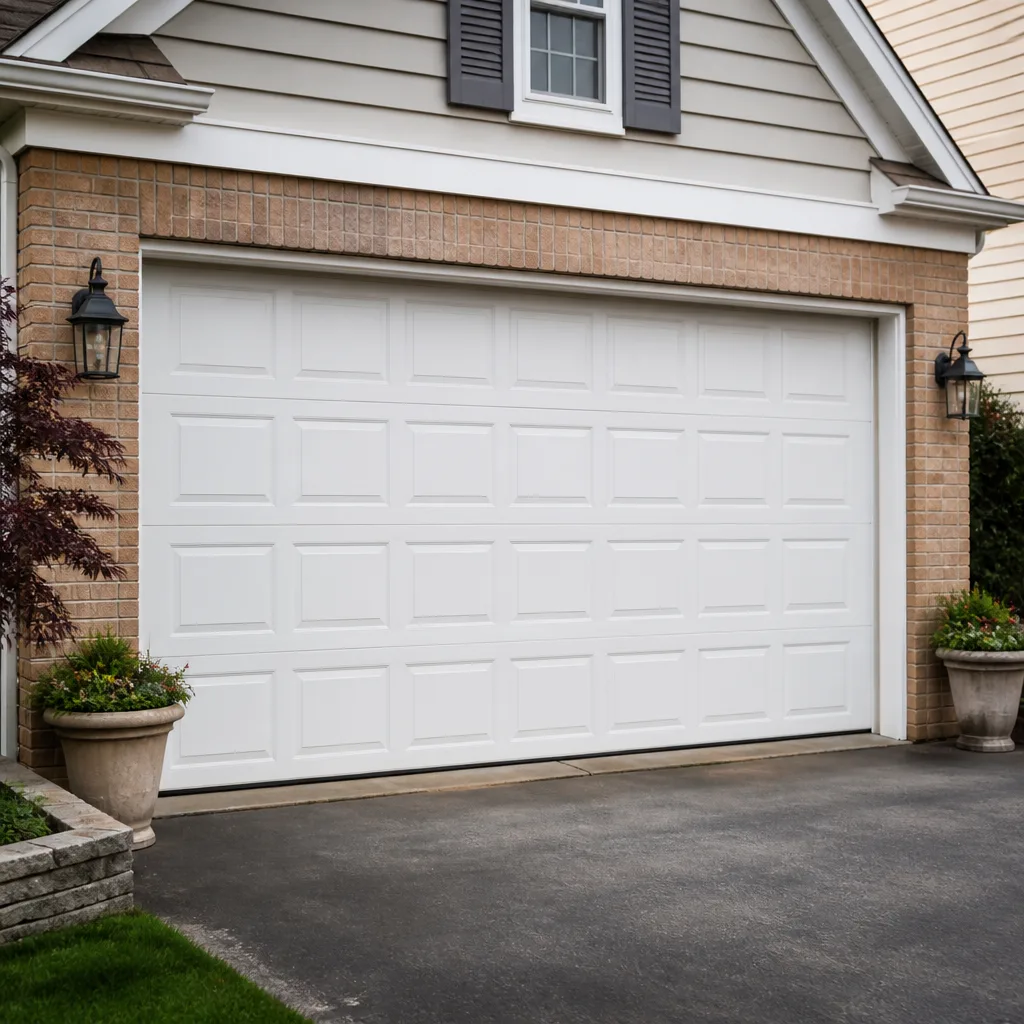
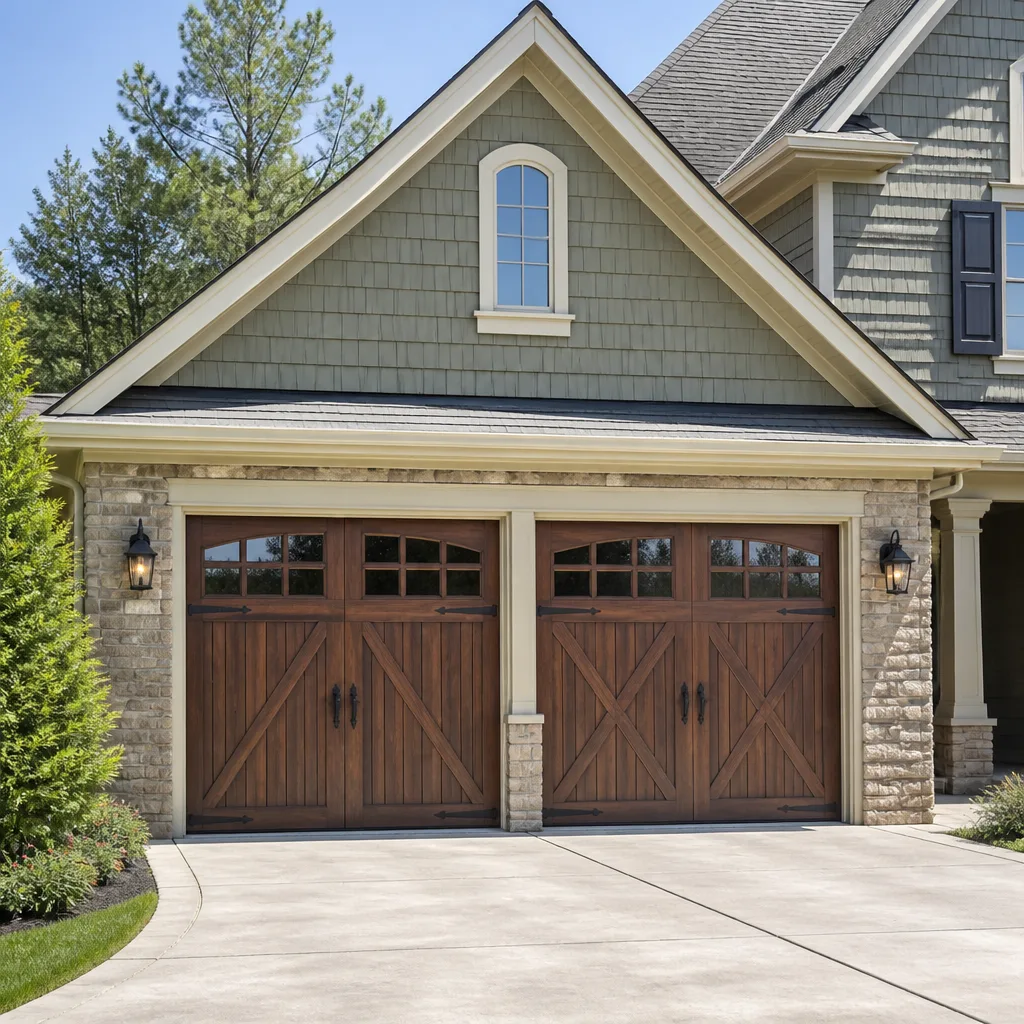
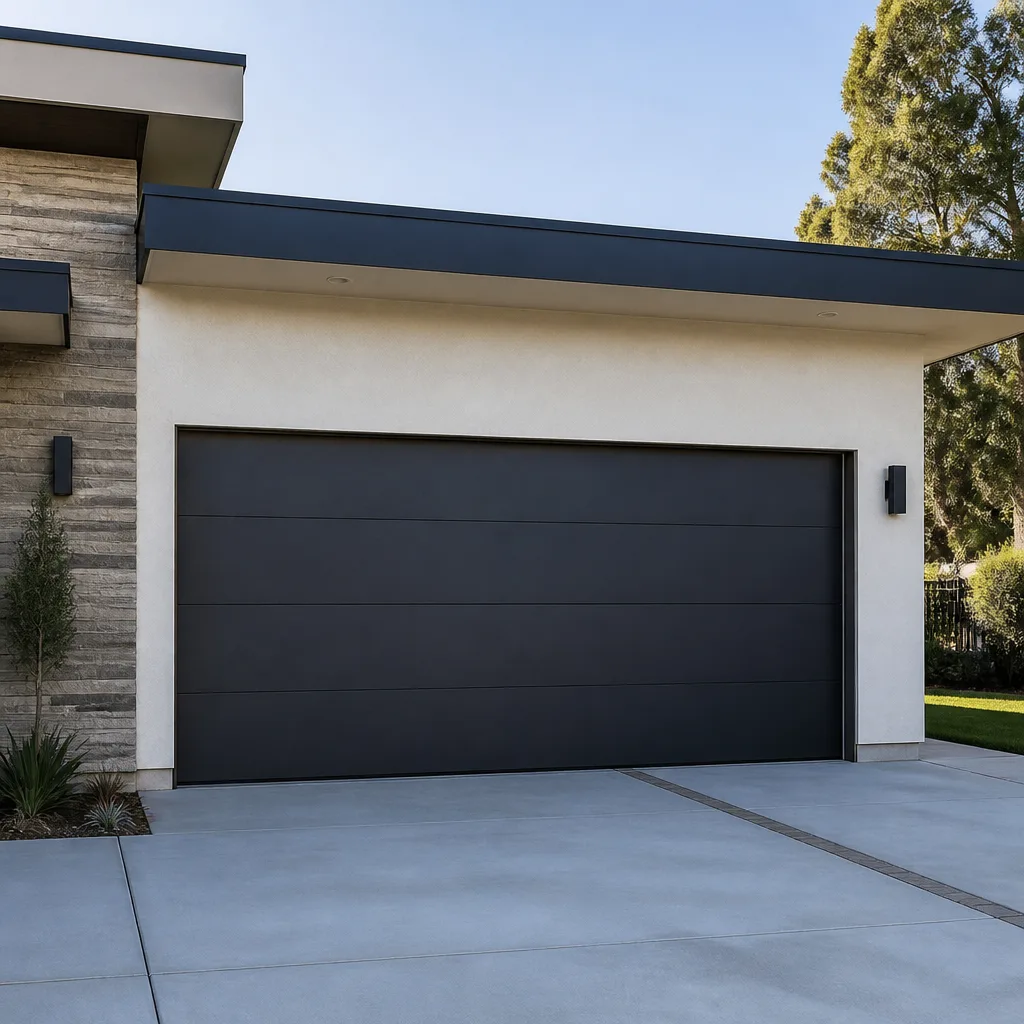
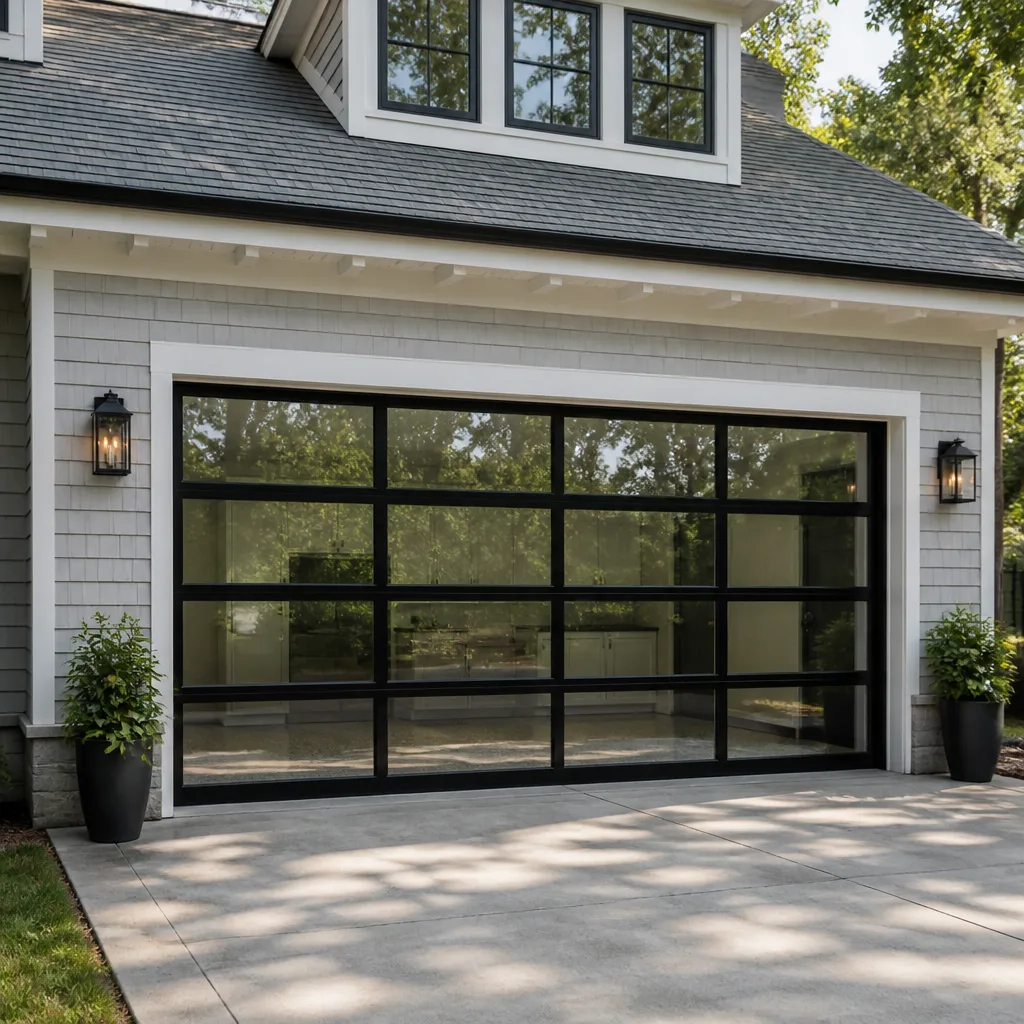
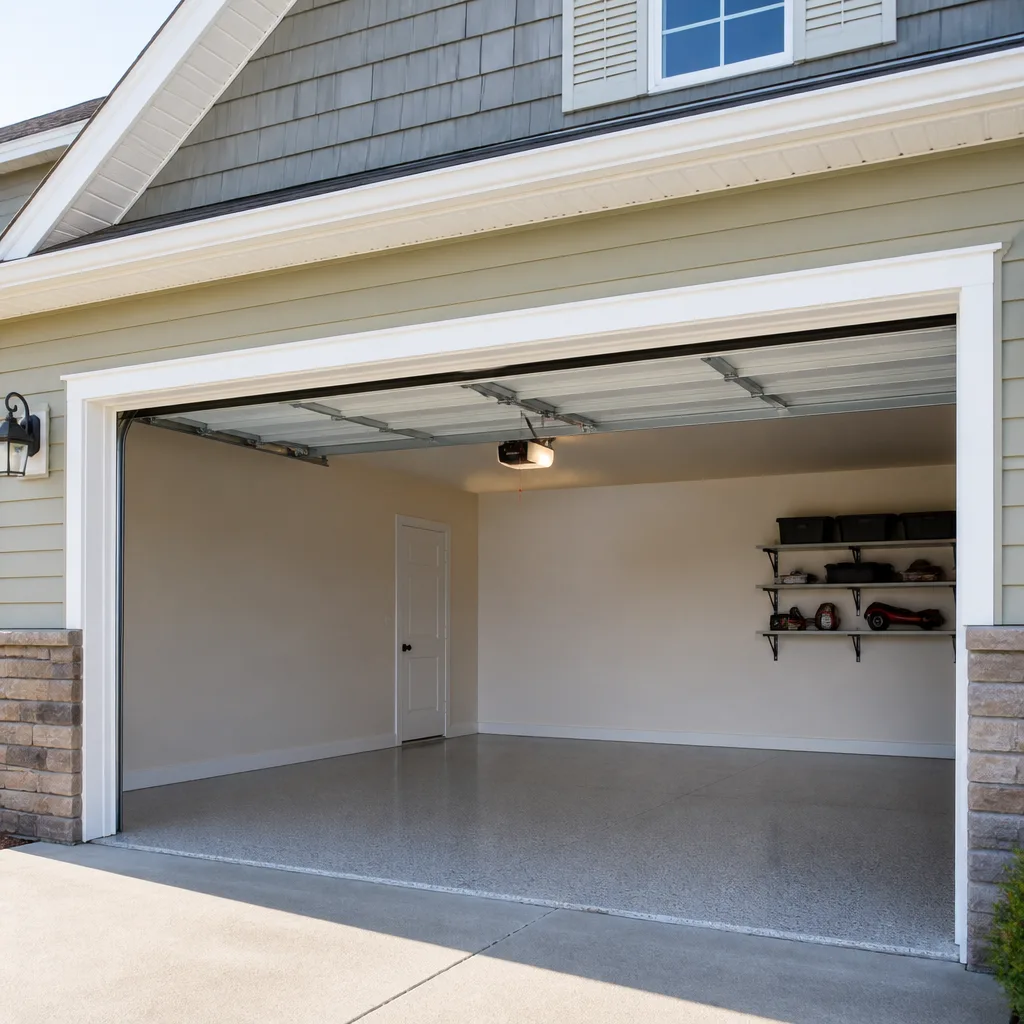
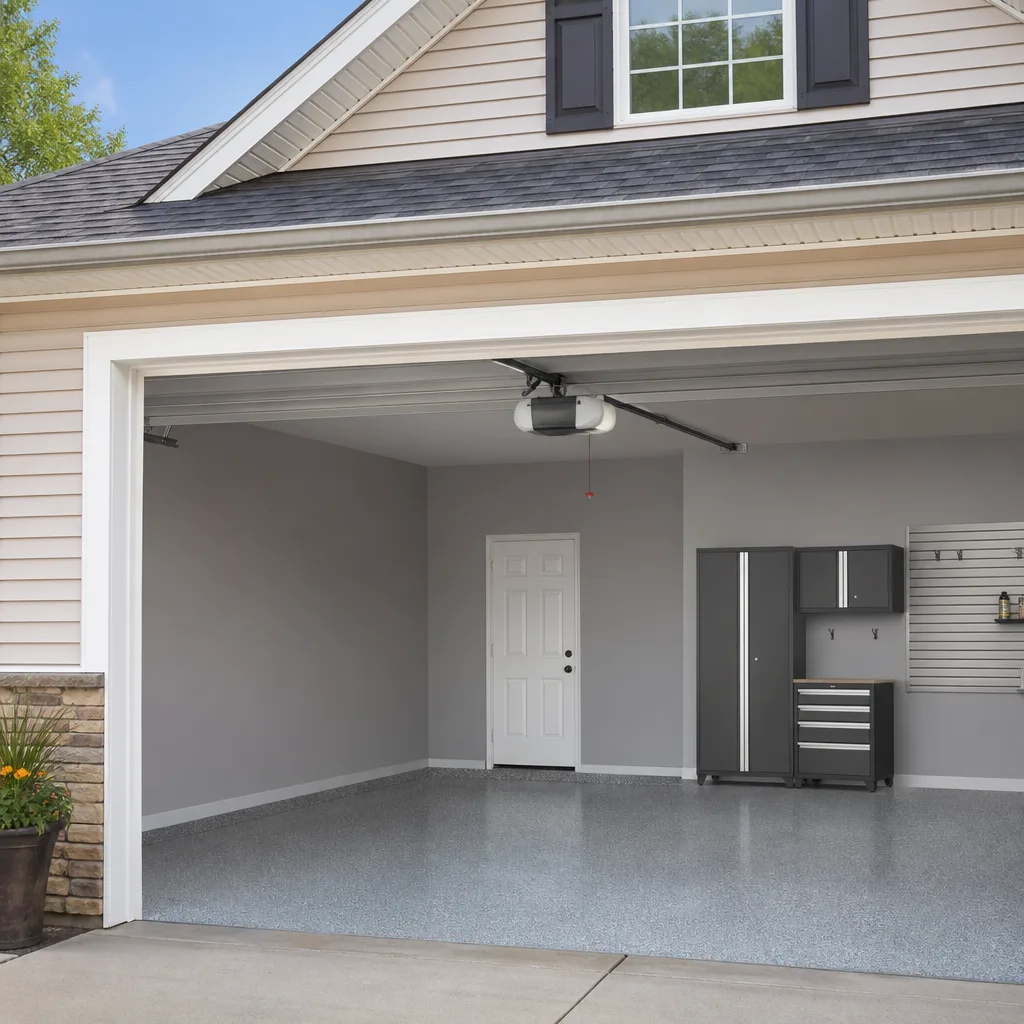
 Before
 After
After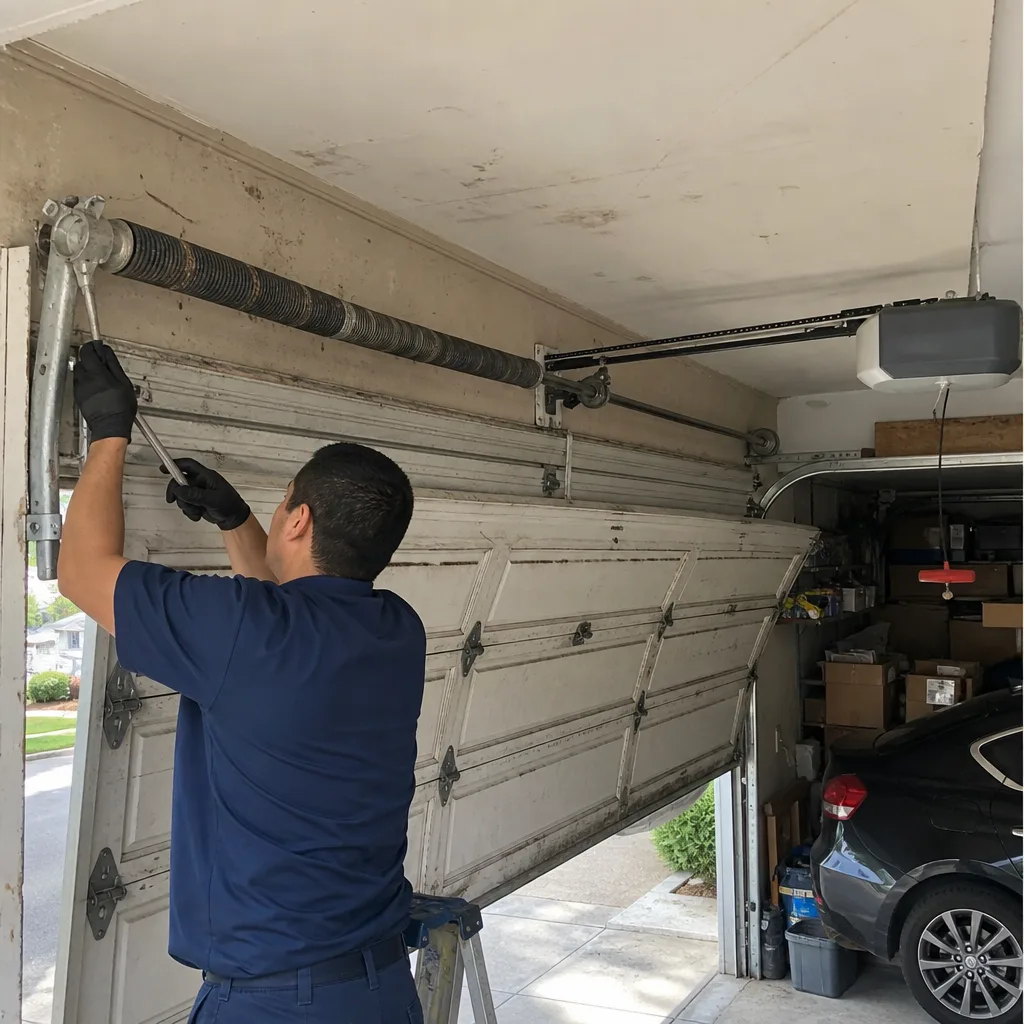 Before
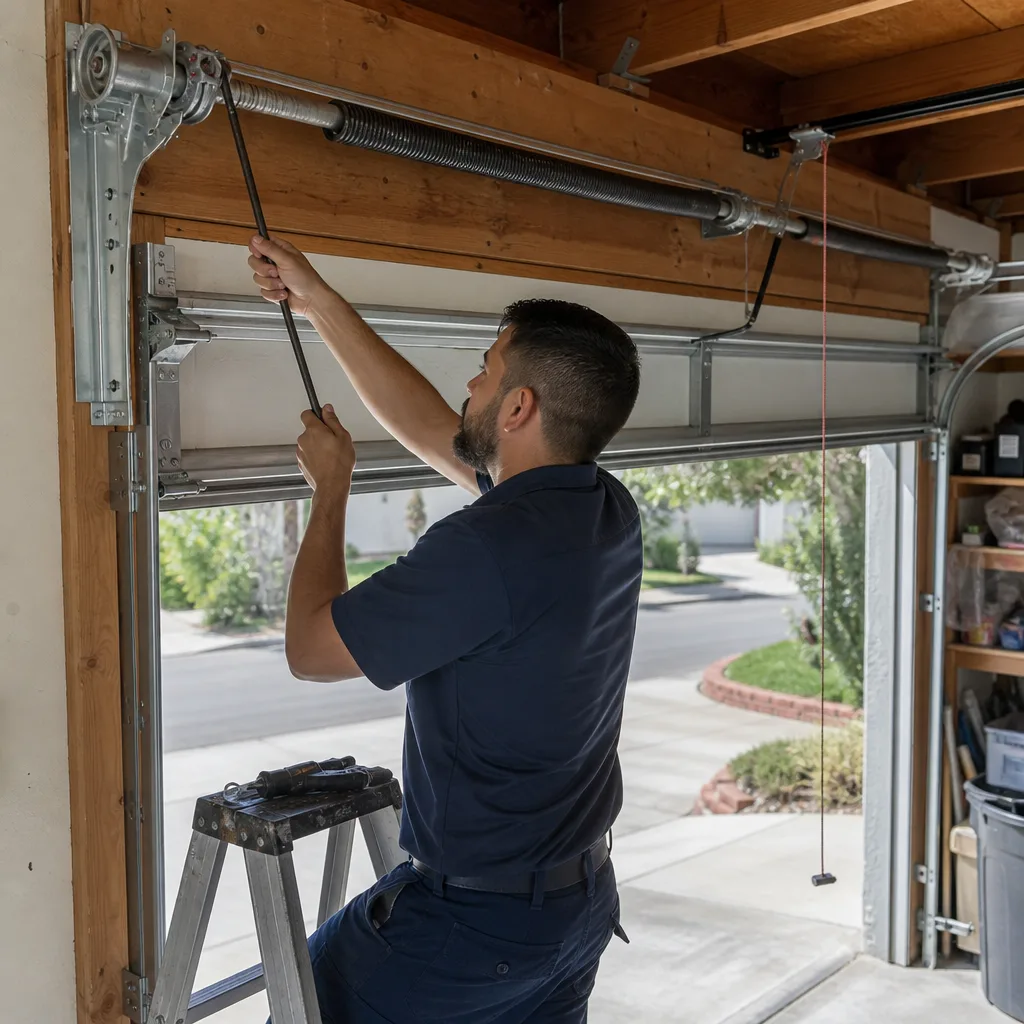 After
After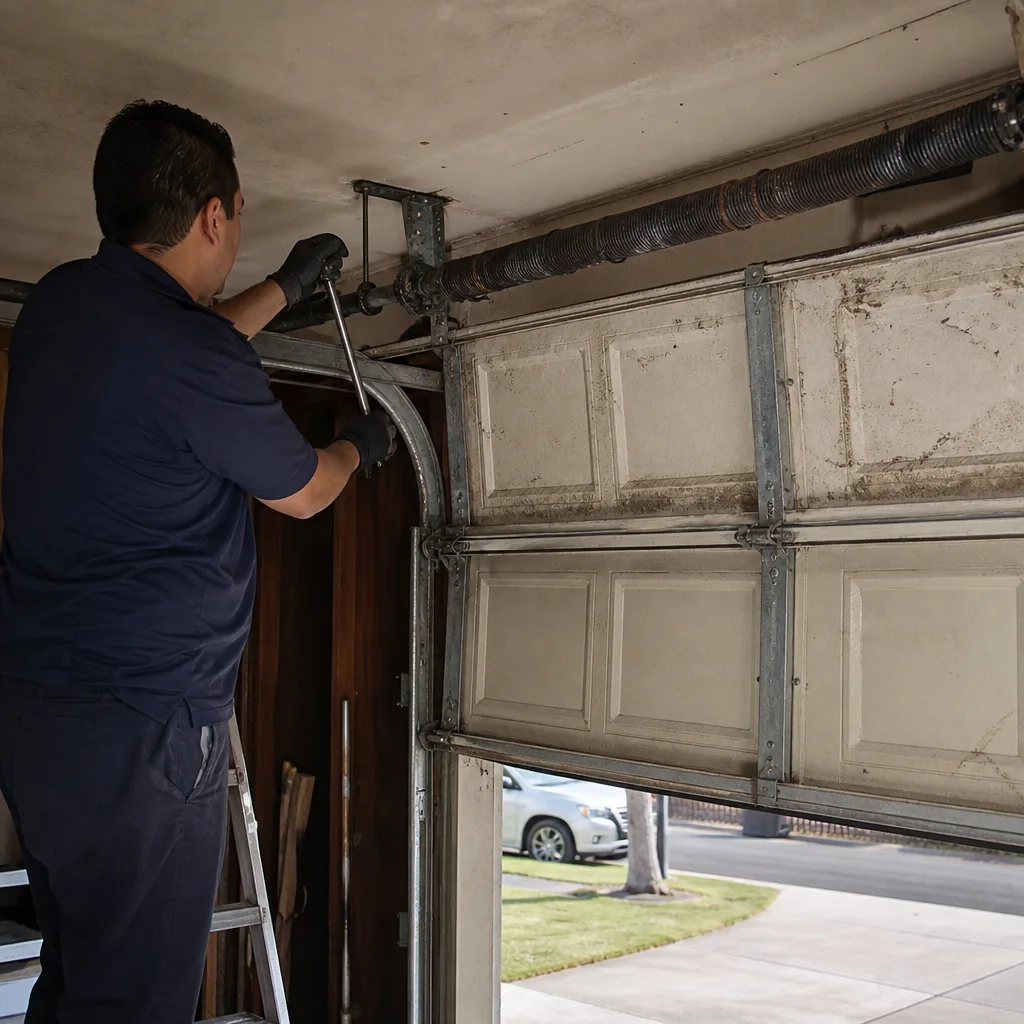 Before
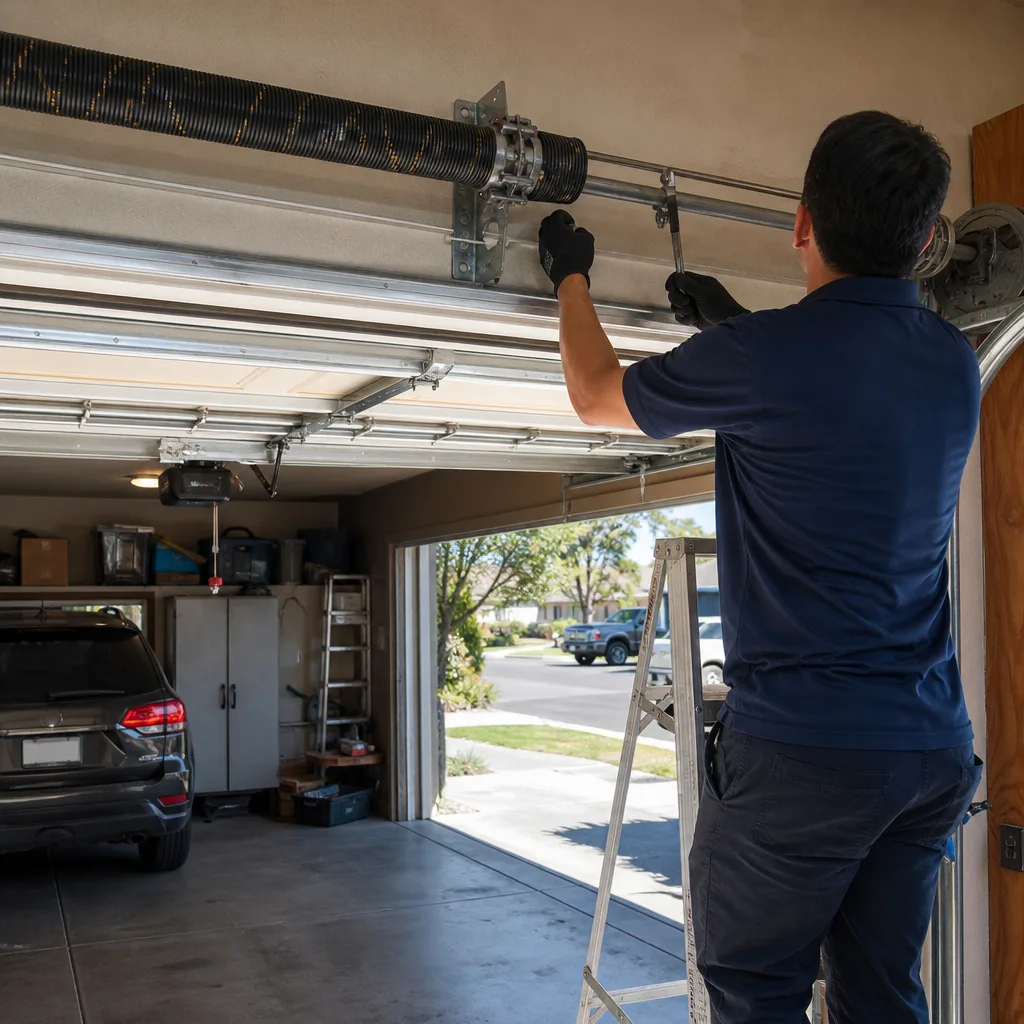 After
AfterThe Complete Guide to Garage Door in Cypress
Most homeowners spend more time choosing a ceiling fan than a garage door, even though the door is the largest moving part of their house and accounts for up to 30% of the home’s street-facing facade. In Cypress, where homes range from 1960s tracts near Cypress College to newer builds in the vicinity of Katella Avenue, that facade faces a specific challenge: coastal-adjacent air, summer heat cycles that swing from 65°F mornings to 90°F afternoons, and the occasional Santa Ana wind gust. This guide treats your garage door as a mechanical system operating in that specific environment, not as a product you pick from a catalog, and complements our DIY vs Professional Garage Door: The Cypress Homeowner’s Decision Guide. You’ll learn how Cypress’s climate affects material choice, why spring type matters for your home’s headroom, how to read an R-value honestly, and the one decision that determines every repair bill for the next two decades.
Quick Answer
A garage door in Cypress should be selected as a complete system: steel gauge and finish rated for coastal-adjacent humidity cycles, springs matched to actual door weight and headroom constraints, and an opener sized to lift that specific load without strain. For most Cypress homes, a 24- or 25-gauge steel door with a baked-enamel finish, torsion spring system where headroom allows, and a ¾-horsepower opener with battery backup will provide 15-20 years of reliable service with minimal maintenance.
Table of Contents
- How Cypress’s Coastal-Adjacent Climate Affects Your Door
- Choosing the Right Material: The 20-Year Decision
- Torsion vs. Extension Springs: What Cypress Headroom Demands
- Garage Door Openers: Beyond the Horsepower Number
- Reading R-Value Honestly in Attached Cypress Garages
- A Maintenance Schedule That Matches Real Cypress Conditions
- Common Mistakes to Avoid
- When to Call a Professional
- Frequently Asked Questions
- The Bottom Line
How Cypress’s Coastal-Adjacent Climate Affects Your Door
Cypress sits roughly 12 miles from the Pacific, close enough for morning marine layer moisture to roll through, far enough for afternoon sun to bake that moisture off by 2 p.m. That daily wet-dry cycle is harder on metal than steady rain. We’ve seen it for decades: doors in Cypress fail differently than doors in Riverside or Ontario.
Steel gauge and finish are the first line of defense. The steel itself needs enough thickness to resist denting from wind-borne debris during Santa Ana events, which peak November through January and can gust to 40+ mph in Cypress. But the finish matters more for longevity. Factory-baked polyester or fluoropolymer coatings outperform field-applied paint by a wide margin. In our experience, doors with lower-tier paint systems show edge rust within 6-8 years in Cypress conditions. Doors with baked-on finishes at 25-gauge or thicker often reach 20 years with only cosmetic weathering.
Aluminum and wood alternatives carry tradeoffs. Aluminum resists corrosion but dents easily and transmits more noise. Wood doors, while beautiful on a custom home near Cypress Golf Club, require resealing every 2-3 years in this climate to prevent moisture intrusion at panel joints. Fiberglass composite has gained ground: it won’t rust, insulates well, and holds paint longer than wood. The downside is structural rigidity. A wide fiberglass door in a double-car opening can sag over time if the frame reinforcement is underspecified.
Temperature swing stress. Cypress sees 25-30°F daily swings routinely in summer. Metal expands and contracts. Vinyl weatherstripping hardens faster. The thermal stress concentrates at panel joints and hardware attachment points. This is why we recommend annual inspection of roller brackets and hinge fasteners for homes in the older tracts off Lincoln Avenue, where doors may have been installed before modern thermal-break designs became standard.
Key climate factors for Cypress homeowners:
- Marine layer moisture: prioritize corrosion-resistant hardware and baked finishes
- Santa Ana wind gusts: specify wind load reinforcement for exposed orientations
- Daily thermal cycling: inspect fasteners and weatherstripping annually
- Summer heat buildup in attached garages: insulation value matters for adjacent living spaces
Choosing the Right Material: The 20-Year Decision
The material you choose determines every downstream cost: repair frequency, replacement timeline, energy bills, and curb appeal (our Garage Door Cost Breakdown: The Cypress Homeowner’s Reference for 2026 breaks down the numbers). This is the decision you want to get right the first time, because changing it means changing the entire system.
Steel remains the practical standard for Cypress. A quality steel door at 24-gauge with a thermal break and polyurethane foam core delivers the best balance of durability, insulation, and cost. The gauge number matters: 24-gauge is thicker and more dent-resistant than 25-gauge, which is thicker than 26-gauge. Big-box retailers often stock 26- or 27-gauge doors at attractive prices. In our experience, those lighter doors show damage within the first five years in active households.
Wood composite and vinyl overlays. These offer the warmth of wood without the maintenance burden. The composite surface resists moisture better than solid wood in Cypress’s humidity cycles. However, the core is still steel or aluminum, and the overlay adds weight. That extra weight affects spring sizing, opener load, and long-term hardware wear. We’ve replaced prematurely failed openers on overlay doors where the original installer spec’d for standard door weight.
Full-view aluminum and glass. Popular on modern homes and some of the newer construction near Katella Avenue. These doors are striking but thermally poor. The aluminum frame conducts heat aggressively, and even insulated glass panels rate poorly compared to solid doors. For detached garages or workshops, this may not matter. For attached garages under bedrooms, the thermal penalty is real and persistent.
How to evaluate a steel door in the showroom:
- Check the gauge stamp on the door edge or specification sheet. If it’s not stated, assume 26-gauge or thinner.
- Look for a thermal break: a plastic or composite strip separating inner and outer steel skins. Without it, condensation forms on the interior surface during marine layer mornings.
- Verify the finish warranty separately from the door warranty. A 20-year door with a 5-year finish warranty is common. The better manufacturers offer 15-20 year finish coverage.
- Lift a sample panel if possible. Heavier generally means more steel and better insulation.
In Cypress, we regularly see Wayne Dalton and Clopay steel doors that have performed well for 18-22 years when properly specified and maintained. We’ve also seen premature failures where a lighter door was paired with an aggressive sun exposure and no overhang protection.
Torsion vs. Extension Springs: What Cypress Headroom Demands
The spring system is the heart of your garage door’s operation. It carries the full weight of the door, typically 150-400 pounds depending on size, material, and insulation. There are two types, and the right choice depends on your garage’s physical constraints and your tolerance for maintenance.
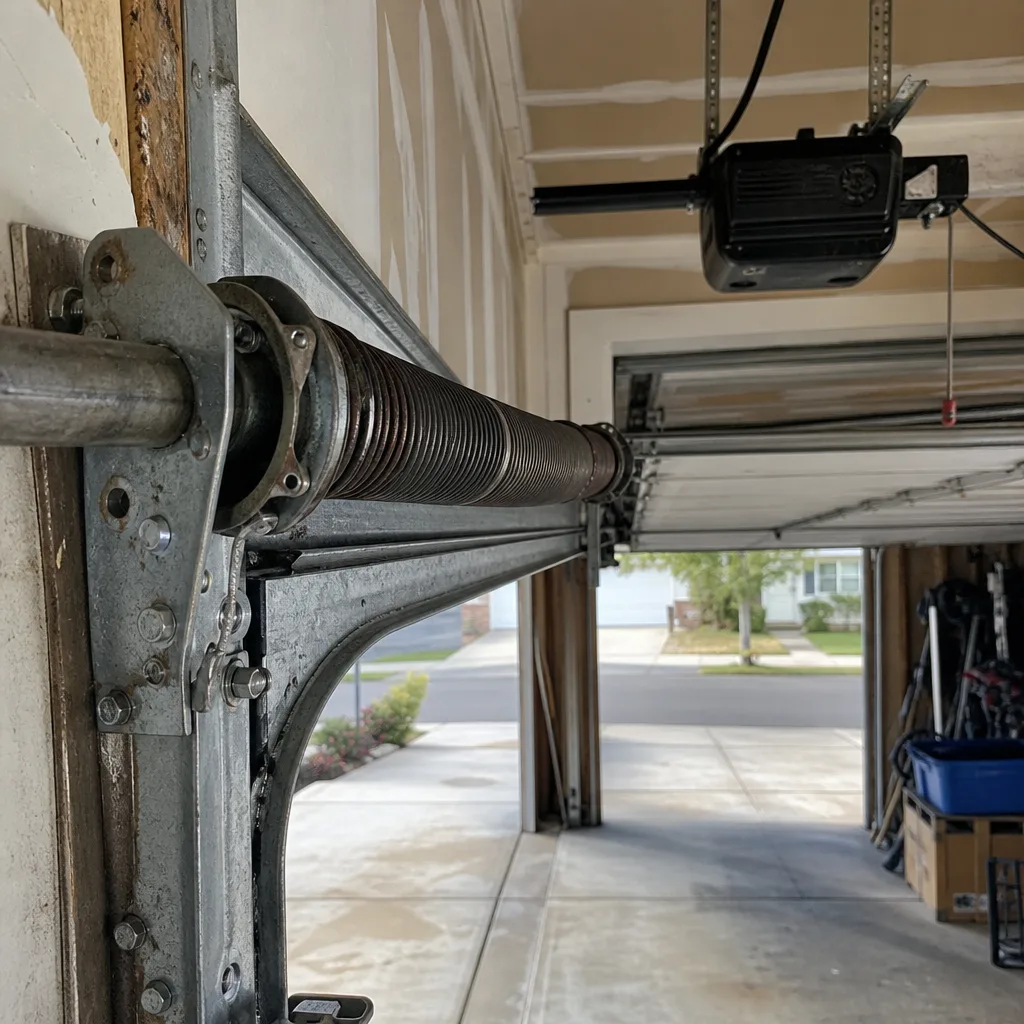
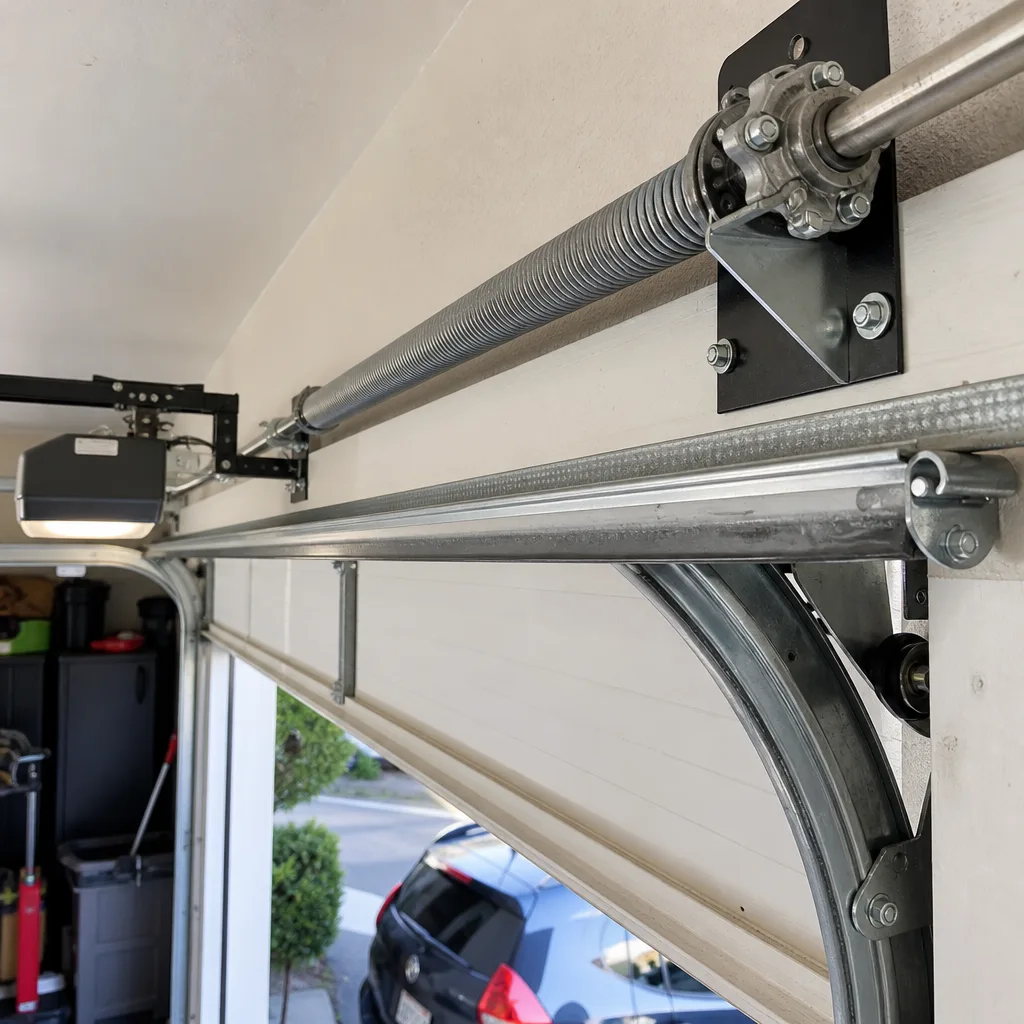
Torsion springs mount above the door on a steel shaft. They twist to store energy, then unwind to assist lifting. This system is smoother, quieter, and more durable. A properly sized torsion spring in Cypress conditions typically lasts 15,000-20,000 cycles (roughly 10-14 years for a two-car household). The catch: torsion springs require roughly 12 inches of headroom above the door opening, plus space for the opener rail.
Extension springs run parallel to the horizontal tracks on each side. They stretch and contract with door movement. They work in tighter spaces, needing as little as 4-6 inches of headroom in some configurations. The tradeoffs are significant: more moving parts, more noise, uneven wear between the two springs, and a shorter typical lifespan of 10,000 cycles. Extension springs also require safety cables, which are often missing or improperly installed on older Cypress homes.
The Cypress headroom problem. Many homes in the older tracts off Ball Road and Cerritos Avenue were built with 8-foot garage ceilings and minimal headroom. Some have as little as 8-9 inches above the door opening. In these cases, a standard torsion system won’t fit without raising the header or modifying the opening. A low-headroom torsion kit can sometimes work in 9-10 inches of space. Below that, extension springs or a rear-mount torsion system (with the spring at the rear of the tracks) may be necessary.
Safety note on springs: Garage door springs are under extreme tension. A torsion spring stores enough energy to cause serious injury or death if released improperly. Extension springs, while less powerful individually, can whip violently if they break without safety cables. We do not recommend DIY spring replacement. The risk is genuine, and the tools and knowledge required are specific. Our technicians carry the correct winding bars, gauges, and replacement springs on every truck for this reason.
When we evaluate a Cypress home for spring replacement, we measure door weight, track radius, headroom, and sideroom. We then specify the correct wire size, inside diameter, and length. Springs are not interchangeable by rough size. A spring rated for 150 pounds on a 7-foot door will fail quickly on a 200-pound 8-foot door, and the failure is often sudden and dangerous.
Garage Door Openers: Beyond the Horsepower Number
Walk into any hardware store and you’ll see openers rated at ½, ¾, and 1¼ horsepower. That number is almost meaningless without context. What matters is whether the opener can lift your specific door, reliably, for 15 years, without straining its motor or stripping its gears.
The real calculation: door weight plus duty cycle. A solid-core wood door or a heavily insulated steel door can weigh 250-350 pounds. A basic uninsulated steel door might weigh 130 pounds. The opener doesn’t just lift that weight once; it lifts it 3-5 times daily, 300+ days yearly, for years. An underpowered opener runs hot, wears its drive gear prematurely, and fails early. We’ve replaced ½-horsepower openers on heavy doors after 4-5 years when a properly sized unit would have lasted 15.
Chain, belt, and screw drive: the noise and maintenance tradeoffs. Chain drives are durable and economical but loud. They’re fine for detached garages. Belt drives, using a reinforced rubber belt, run significantly quieter. For bedrooms above or adjacent to the garage, the difference is noticeable. Screw drives have fewer moving parts but require periodic lubrication and can be sensitive to temperature extremes. In Cypress’s climate, belt drives have proven most reliable for attached garage applications.
Smart features: useful or gimmick? Battery backup is now required by California law for new opener installations (SB 969). It ensures your door operates during power outages, which matters for emergency egress. Wi-Fi connectivity lets you monitor and operate the door remotely. For homeowners who travel, this is genuinely useful. For others, it’s an additional failure point. We install LiftMaster and Chamberlain openers with these features regularly, but we always ask how the customer will actually use them.
What to specify for a typical Cypress home:
- ¾-horsepower motor minimum for insulated double-car steel doors
- Belt drive for attached garages, chain drive acceptable for detached
- Battery backup (legally required for new installations in California)
- Soft start/stop programming to reduce wear on door and opener
- Security+ 2.0 rolling code technology to prevent code-grabbing theft
We carry LiftMaster, Chamberlain, Genie, and Craftsman openers on our trucks, along with rail extensions for 8-foot and 10-foot doors. Most installations are completed in a single visit, including programming remotes and testing safety reversal systems.
Reading R-Value Honestly in Attached Cypress Garages
Garage door manufacturers prominently display R-values: R-6, R-12, R-16, even R-20. These numbers suggest thermal performance, but the gap between laboratory measurement and real-world performance is substantial. For Cypress homeowners with attached garages, especially in the older neighborhoods where the garage shares a wall with a kitchen or bedroom, understanding this gap matters for comfort and energy bills.
How R-value is measured. The standard test measures the center-of-panel thermal resistance in a controlled environment. It does not account for the panel edges, the gaps between panels, the perimeter weatherstripping, or the thermal bridging at hinges and hardware attachments. A door rated at R-16 might perform at R-8 or less when installed, because the weak points dominate.
The real factors in thermal performance. Panel construction matters more than the headline number. A door with a continuous layer of polyurethane foam bonded to both steel skins performs better than a door with injected polystyrene beads that settle and create voids. The thermal break between inner and outer skins prevents direct heat conduction. And the perimeter seal system, including the bottom astragal and side weatherstripping, blocks air infiltration, which can account for more heat loss than conduction through the panel.
Cypress-specific considerations. Morning marine layer moisture can condense on cold interior surfaces. A door with good thermal performance prevents this condensation, protecting stored items and reducing musty odors. In summer, an attached garage with a poorly insulated door can reach 95-100°F by late afternoon, transferring heat to the living space. We’ve measured temperature differentials of 15-20°F between garages with properly specified insulated doors and those with uninsulated or poorly sealed doors.
Honest guidance on R-value:
- R-6 to R-8: adequate for detached garages in mild climates
- R-10 to R-12: reasonable minimum for attached garages in Cypress
- R-16+: diminishing returns unless the garage is conditioned space; invest in air sealing first
- Always verify foam type (polyurethane preferred) and presence of thermal break
For a square deal on insulation value, ask your installer for the whole-door performance, not just the center-of-panel number. At Garage Door Installation in Cypress, we specify doors based on actual performance in local conditions, not catalog claims.
A Maintenance Schedule That Matches Real Cypress Conditions
Garage doors are often the most neglected major mechanical system in a home. They operate thousands of times yearly with minimal attention until something breaks. A modest maintenance routine, matched to Cypress’s specific climate stressors, prevents most emergency calls and extends system life significantly.
Every 3 months (quarterly):
- Visually inspect springs for gaps in the coils, rust, or paint cracking. These indicate fatigue or corrosion.
- Check cables for fraying, especially near the bottom bracket where they wrap around the drum.
- Test door balance: disconnect the opener and lift manually. The door should stay at mid-travel without drifting. If it falls or rises, springs need adjustment.
- Lubricate rollers, hinges, and bearings with a silicone-based spray. Avoid WD-40, which attracts dust and dries to a gummy residue.
Every 6 months:
- Inspect weatherstripping for hardening, cracking, or gaps. Cypress’s UV exposure and temperature swings accelerate deterioration.
- Tighten all visible fasteners: roller brackets, hinges, track bolts. Thermal cycling loosens them over time.
- Test safety reversal: place a 2×4 flat on the floor under the door path. The door must reverse on contact. If it doesn’t, the opener force setting needs adjustment.
- Clean and inspect photo-eye sensors. Alignment drift is common after minor impacts from bikes or storage items.
Annually:
- Professional inspection of spring tension, cable wear, and track alignment. We offer our Mainspring Garage Door Co. home $89 Seasonal Tune-Up for this purpose.
- Evaluate door finish for chalking, rust spots, or coating failure. Early touch-up prevents progressive corrosion.
- Check opener chain or belt tension and travel limit settings.
For homes in the Cypress College area or near the older commercial corridors, where doors may be 20-30 years old, we recommend bi-annual professional inspection. The hardware from that era was robust, but fatigue accumulates. Catching a frayed cable before it snaps prevents the door from dropping uncontrolled and damaging vehicles or structure.
Common Mistakes to Avoid
- Buying on price per square foot without checking gauge. A 27-gauge door at $800 installed is no bargain if it dents in the first year and needs replacement in eight. In Cypress’s wind and sun exposure, the thinner metal fails faster.
- Ignoring headroom constraints when choosing spring type. Homeowners in the Lincoln Avenue tracts sometimes request torsion springs for their smooth operation without measuring first. The conversion requires structural modification that adds cost and complexity.
- Matching a new opener to old, unbalanced door hardware. A new LiftMaster or Craftsman opener will strain and fail prematurely if the door springs are weak or the tracks are misaligned. Always service the door system before upgrading the opener.
- Assuming all “insulated” doors perform equally. Polystyrene bead-filled doors at R-12 underperform polyurethane foam doors at R-10 in real conditions. The bonding and continuous coverage matter more than the number.
- DIY spring replacement after watching online videos. The tools and techniques shown are often incorrect or incomplete for your specific door. We’ve responded to emergency calls where a homeowner’s attempt resulted in a door off-track, damaged panels, or personal injury.
- Neglecting the bottom seal until water enters. Cypress’s occasional heavy rains, particularly in El Niño winters, exploit deteriorated astragals. Water intrusion damages stored items and can corrode the bottom section from the inside out.
- Choosing aesthetics over function for the primary door. A full-view glass door looks exceptional on a modern home, but if it’s the main entry point for vehicles and storage, the thermal and privacy penalties are daily realities.
When to Call a Professional
Some garage door issues are straightforward for a handy homeowner: lubrication, weatherstripping replacement, remote battery changes. Others involve genuine hazard and require specific training and tools.
Call a professional when you observe: a broken spring or cable (the door is extremely heavy and dangerous to operate); the door off-track or hanging unevenly; opener motor running but door not moving; grinding or binding noises that persist after lubrication; or any damage after a vehicle impact. These scenarios risk further damage or injury if addressed without proper equipment.
For installation or replacement, professional measurement and specification prevent costly mismatches. Door weight, headroom, sideroom, and electrical supply all factor into a correct installation. A door that fits the opening but strains the opener, or an opener that clears the door but interferes with storage racks, is a problem that persists for years.
Garage Door Repair in Cypress from Mainspring Garage Door Co. offers free estimates. Carl Dutton and our team have served this area since 2016, building on 42 years of company history. We arrive with springs, cables, openers, and hardware on the truck, state the flat price before any work begins, and back every completed job with our 90-Day Done Right Promise in writing. Call (626) 593-8187 to schedule.
Frequently Asked Questions
A quality steel door with baked finish and proper maintenance typically lasts 20-25 years in Cypress conditions. The marine layer moisture and thermal cycling are moderate stressors compared to true coastal or desert environments. The spring system usually requires replacement at 10-15 years depending on cycle count. Call (626) 593-8187 for a free condition assessment.
Most standard single-car steel door replacements in Cypress range from $1,200 to $2,200 installed, including hardware and disposal. Double-car insulated doors with windows or custom finishes range from $2,000 to $4,500. The price depends on gauge, insulation level, window configuration, and whether the opener is included. We provide a written, itemized quote before any work begins, with no surprises on the bill.
Sometimes, if the door is relatively new and the manufacturer still produces that panel style. For doors over 15 years old, matching panels are often discontinued, and a full replacement is more practical. We evaluate this on every call and will tell you honestly if section replacement is viable or if you’re better served by a new door. Our Free Second Opinion applies to any written estimate you’ve received elsewhere.
Noise usually indicates worn rollers, loose hardware, or an opener straining against an unbalanced door. In Cypress’s older tracts, we also see noise from extension spring systems that have never been upgraded to torsion. A $89 Seasonal Tune-Up often resolves noise issues entirely. If the opener is the source, Garage Door Opener in Cypress replacement with a belt-drive unit may be warranted.
The City of Cypress requires permits for structural modifications to the opening, electrical work for new opener circuits, and any changes to fire-rated assemblies between garage and living space (see Garage Door Permits, Codes & Inspections in CA: What You Need to Know for details). A direct replacement of an existing door on existing hardware typically does not require permitting. We handle permit requirements when they apply and can advise on your specific situation.
First, check that the opener is plugged in and the circuit breaker hasn’t tripped. Verify the photo-eye sensors are aligned and unobstructed. Try the wall button, not just the remote, to isolate a remote battery issue. If the motor runs but the door doesn’t move, or if you hear a loud bang from the spring area, stop operating the system and call for service. A broken spring makes the door dangerously heavy. Call (626) 593-8187 for same-day emergency response.
The Bottom Line
A garage door in Cypress is a system decision, not a product purchase. The right choice accounts for coastal-adjacent moisture, daily thermal cycling, your home’s specific headroom constraints, and the actual weight your opener must lift. Steel at 24-gauge or thicker with baked finish and polyurethane core provides the most reliable long-term value. Torsion springs outperform extension springs where space allows. Opener horsepower should be sized to door weight, not guessed from a catalog chart. And the R-value on the brochure matters less than the construction details that determine real-world thermal performance.
Get these fundamentals right, maintain the system on a reasonable schedule, and your garage door will operate quietly and reliably for two decades. Get them wrong, and you’ll be revisiting the decision with a repair bill every few years.
For homeowners in Cypress who want a square deal from people who will still be in town when it matters, Mainspring Garage Door Co. provides free estimates, upfront pricing, and work backed in writing. Call (626) 593-8187 to speak with a live person, any time, and we’ll schedule a time that works for you.
Written by Carl Dutton, Owner at Mainspring Garage Door Co., serving Cypress since 2016.